
What materials are best for durable custom bedroom wardrobes?
As a cabinet professional, I combine wardrobe design detail with custom kitchen cabinet buying standards so you get durable, low-maintenance results. This guide answers six specific, pain-point questions beginners frequently face when specifying custom bedroom wardrobes and provides purchase-level guidance you can use when commissioning custom kitchen cabinets.
1. How do I choose between 18mm plywood and 18mm MDF for a custom bedroom wardrobe in a humid climate?
Short answer: exterior-grade plywood (preferably Baltic birch or furniture-grade hardwood plywood) is the safer long-term choice in humid or variable climates; use moisture-resistant MDF only in protected interior areas.
Detail and why it matters:
- Dimensional stability: Plywood has a cross-laminated core that resists expansion, contraction and delamination better than standard MDF or particleboard. In humid rooms, MDF can absorb moisture along cut edges and swell unless sealed perfectly.
- Delamination risk: Properly manufactured hardwood or Baltic birch plywood resists edge delamination. Look for A/B or A/A face grades and phenolic-impregnated glue. Avoid low-grade imported plywood with inconsistent glue lines.
- When MDF is acceptable: Use moisture-resistant (MR) or HDF panels for painted wardrobes where exact smoothness is critical and the piece is in a well-ventilated, climate-controlled room. Ensure full edge sealing with compatible primer and paint or 2mm ABS/PVC edge banding.
- Cost vs lifespan: Plywood typically costs more upfront but reduces repair/replacement risk from moisture-related failure. For bedrooms, the extra cost is usually justified by longer service life.
Practical spec to include in a contract: 18mm Baltic birch or cabinet-grade hardwood plywood for carcasses, 18–25mm plywood shelves for spans over 900mm, or MR-MDF with full edge sealing for painted non-structural panels.
2. What core material and edge treatment prevent corner delamination and edge blowouts after 5+ years?
Long-term durability hinges on core quality and edge finishing.
- Core selection: Use multi-ply hardwood or birch plywood cores for visible edges and structural components. For veneered faces, rotary-cut plywood with consistent cores reduces propensity to chip or separate.
- Edge banding vs solid edges: For veneered or laminate faces, 0.8–2.0mm ABS or PVC edge-banding fused with hot-melt adhesives gives the best resistance to moisture infiltration at edges. Laser edge-banding provides the cleanest glue-free bond on MDF and plywood edges for painted or melamine surfaces.
- Corner reinforcement: Use glued and screwed butt joints, or preferably dado/locking dado joints on shelves and carcasses. Apply cross-grain blocking at corners to reduce stress-related gaps. For face-frame wardrobes, dovetail or mortise-tenon for the frame corners increases rigidity.
- Sealing: All cut edges must be sealed with shellac or a compatible waterborne sealer before painting or laminating. For melamine, return the laminate 2–3mm over the edge and trim precisely to reduce exposed core.
Specify: “All exposed panel edges to receive 2mm ABS edge-banding or solid wood bullnose; all cut edges sealed with waterborne sealer; carcass joints to use dado or cam-dowel systems and glue where applicable.”
3. How should I specify load-bearing elements (hanging rails, shelving, drawer slides) so heavy coats and winter boots don’t cause sag or failure?
Design for actual loads rather than assumptions—list use-cases in the brief.
- Hanging rails: Use solid steel tubular rails (brushed nickel or zinc-plated) supported at intervals no greater than 900mm (36) for long runs; add center supports or a back cleat on runs over 1200mm. Specify mounting directly to a reinforced back panel or wood blocking anchored to studs.
- Shelves: For open shelves intended for folded clothing or heavy shoe storage, specify 19–25mm plywood or laminated shelves with a front stiffening rail if the span exceeds 900mm. Add center supports for long spans or use thicker material.
- Drawer slides: Require full-extension, soft-close undermount or heavy-duty side-mount slides from recognized suppliers (Blum, Hettich, Accuride). For heavy-duty drawer use (boots, tools) specify slides with clear manufacturer load ratings and a safety margin—ask for slides rated at least 30–50% above expected load.
- Specification language: “All hanging rails to be solid tubular steel, supported every 900mm; shelving to be 19mm plywood for spans up to 900mm, 25mm above; drawers to use full-extension soft-close undermount slides, manufacturer-provided load rating to exceed design load.”
4. Which finishes and sealants resist yellowing and are safe for low-VOC bedroom environments (and how does that apply to kitchen cabinet finishes)?
Bedrooms need low-VOC finishes; kitchens require higher durability and stain resistance but can also use low-VOC products.
- Low-VOC clear and pigmented finishes: Use water-based lacquer or waterborne polyurethane with low VOC formulations. These provide good clarity and resist yellowing better than traditional oil-based lacquers; modern waterborne catalyzed finishes offer improved hardness.
- UV-cured finishes: For factory-applied finishes on kitchen cabinet doors, UV-cured lacquers provide a hard, yellow-stable surface but may have different VOC profiles. Confirm curing method and emissions with the manufacturer.
- Thermofoil and laminate: Thermofoil on MDF provides a maintenance-friendly surface that resists yellowing, but its edges are vulnerable to peeling in humid conditions. Proper edge-sealing and heat-stable adhesives are essential, especially near kitchen heat or steam sources.
- Formaldehyde compliance: For both bedrooms and kitchens, insist on CARB Phase 2 / U.S. EPA TSCA Title VI compliance for composite wood products to ensure low formaldehyde emissions.
Include finish requirements in your purchase order: “All finishes to be water-based, low-VOC, from a named manufacturer, with proof of VOC content and color-stability data; thermally-fused materials to have sealed return edges.”
5. How do I design wardrobe interiors to avoid musty odors and mold in climates prone to condensation?
Ventilation and moisture control are as important as material choice.
- Back panel and ventilation: Leave a 3–10mm gap behind the back panel or specify slotted/top-bottom ventilation channels to allow air movement if the wardrobe is built into an exterior wall. Raised-back cleats can create an airflow cavity between wardrobe and wall.
- Material choice: Use MR-grade plywood or MR-MDF for back panels where condensation is possible. Avoid raw particleboard backs unless sealed on all faces.
- Interior layout: Avoid tightly sealed, fully enclosed cubbies for damp items. Specify ventilated shelves or perforated shoe racks and include moisture-absorbing solutions (silica or desiccant trays) integrated into drawer bases or bottom compartments when needed.
- Installation details: Ensure wardrobe is not installed flush against damp external masonry; add a vapor barrier or keep a service gap. For built-ins, confirm wall insulation and exterior moisture control are adequate before final installation.
6. What contract specs on lead times, tolerances, warranties, and installation prevents hidden costs when ordering custom bedroom wardrobes or kitchen cabinets?
Many disputes come from vague contracts. Specify measurable, inspectable items.
- Lead time: State a fixed production lead time (for example, 4–8 weeks) and list agreed milestones (design approval, material order, paint cycle, delivery). Define remedies or allowance for delays beyond a stated buffer if the shop is late without cause.
- Tolerances: Specify dimensional tolerances (±2mm for door width, ±3mm for panel thickness) and acceptable finish tolerances (no runs, orange peel within agreed levels). Require factory mock-up or sample door/finish approval before full production.
- Warranty: Require panel and finish warranty terms and hardware manufacturer warranties to be documented. Standard practice: hardware warranties vary by brand—list hardware brands and that the vendor will provide manufacturer warranty documents upon delivery.
- Installation: Include site condition requirements (level floors, accessible utility access, studs in expected locations). State that site rectifications are out-of-scope unless vendor provided site-measure/rectification service. Define anchoring requirements: cabinets to be fixed to studs with x-size fasteners every 800mm unless structural blocking is provided.
- Payments and change orders: Tie final payment to completion of punch-list items within an agreed timeframe (e.g., vendor has 7–14 days to remedy defects). Require written change orders for any field modifications with cost and time impacts.
Including these explicit specs avoids common hidden costs—reworks, additional site labor, or replacement panels for delamination or improper finish.
Concluding advantages: Specifying durable core materials (cabinet-grade plywood or MR panels where appropriate), professional edge treatments, proven hardware, low-VOC finishes, and precise contract language delivers wardrobes and kitchen cabinets that last longer, resist moisture and yellowing, require less maintenance and reduce lifecycle cost. For industry buyers, aligning wardrobe specs with kitchen cabinet standards (CARB/TSCA compliance, KCMA-level performance, named hardware brands) provides measurable quality and simplifies warranty/repair chains.
For a tailored quote and specification checklist for your custom bedroom wardrobe or kitchen cabinets, contact us: www.Komoxcabinet.com • info@Komoxcabinet.com
How to ensure after-sales service for walk in closets?
How to choose a cabinet maker for luxury kitchens?
How can branding boost modern luxury walk in closet sales?
Which materials are best for luxury kitchen cabinets?
FAQ
What's lead time for furniture cabinets?
It's about 20 - 30 days.
Can we produce products according to customer's room size?
Yes. All our cabinets are custom size.
What information are needed for getting a quote for our furniture cabinets?
Your size infomation or room drawings.
What's the payment terms of all our products?
T/T (30% inadvance, the balance shall be paid off before delivery), Western Union or L/C.
Can we ship the furniture cabinets to customer's port or city?
Yes. Please provide the city name or port name when you send us an inquiry.
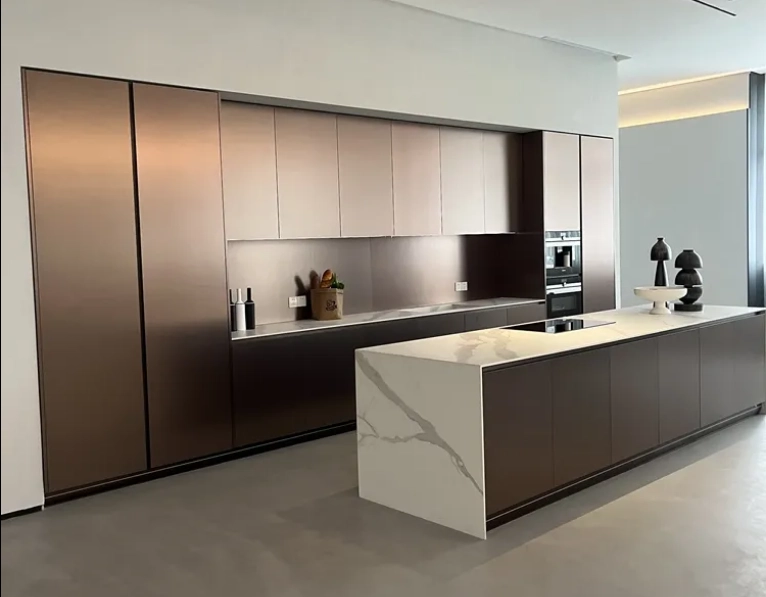
PET Metal Brass Kitchen Cabinet

Aluminum Frame Glass Door Kitchen Cabinet
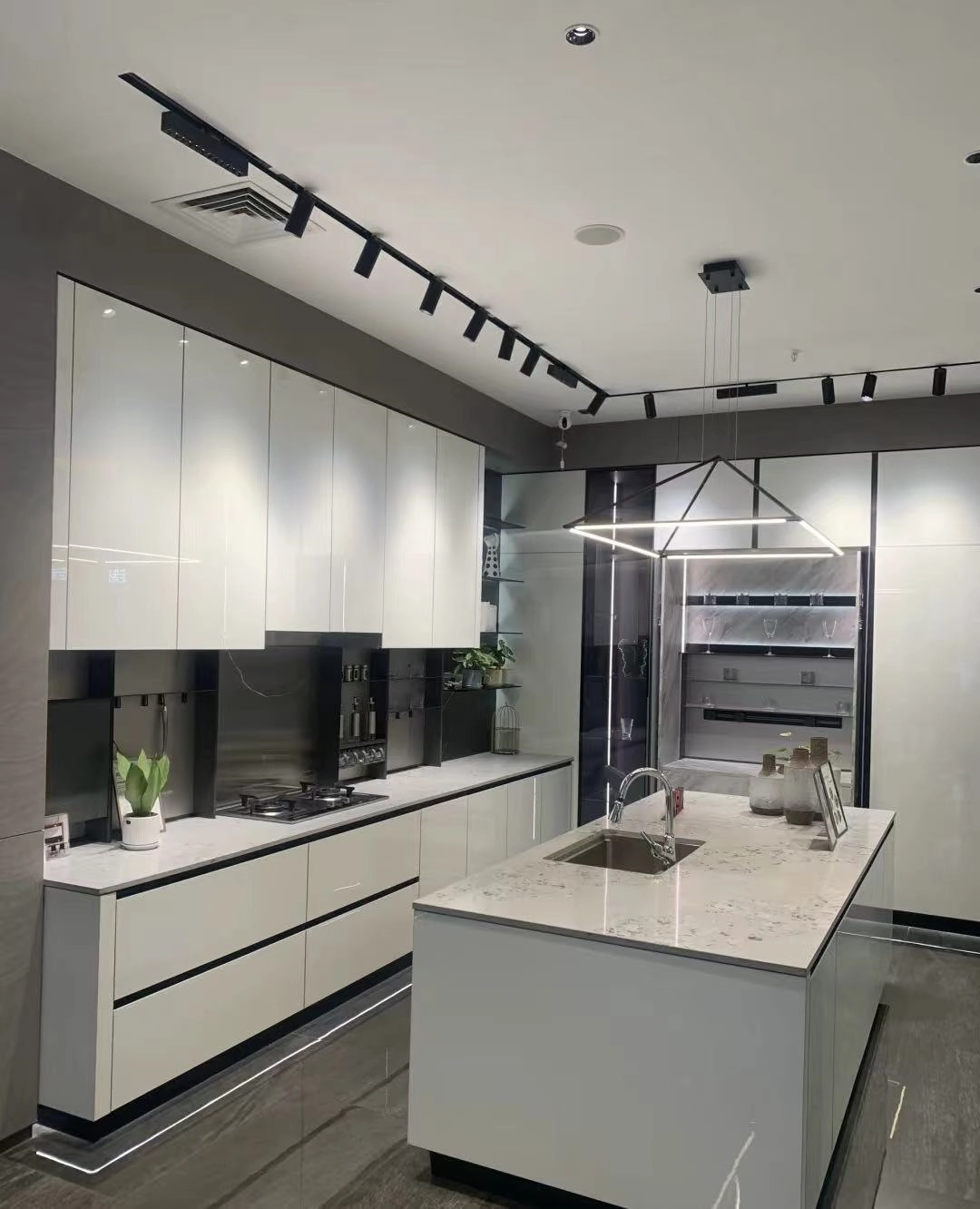
Custom Acrylic Laminate Kitchen Cabinets | Komox Smart Home | High-Gloss, Eco-Friendly, Durable

Custom Black & Gold Marble Modular Cabinet System
Request a Free Consultation And Price Estimate
Get in touch with Komox today for a personalized consultation, and let us bring your vision to life. Fill out the form below or contact Komox directly to start your journey toward a beautifully tailored home!"

Copyright © 2026 Komox All Rights Reserved.

Get a free quote
Hi,
Transform your space with MURANO's custom serve. Contact us for a personalized consultation and bring your vision to life. Start your journey to a tailored home today!
Have a specific project?
😎Hi,
-
If you are interested in our products/custom services or have any questions, please let us know so that we can better assist you.
Send my request
Hi,
Transform your space with MURANO's custom serve. Contact us for a personalized consultation and bring your vision to life. Start your journey to a tailored home today!
Custom Furniture Everyone’s Talking About!
😎Hi,
-
Create your dream space with our most popular custom designs — stylish, functional, and built to last.
Whatsapp: +8618274867221
Scan QR Code